The Garden Privacy Problem Getting Harder to Solve in New-Build Homes
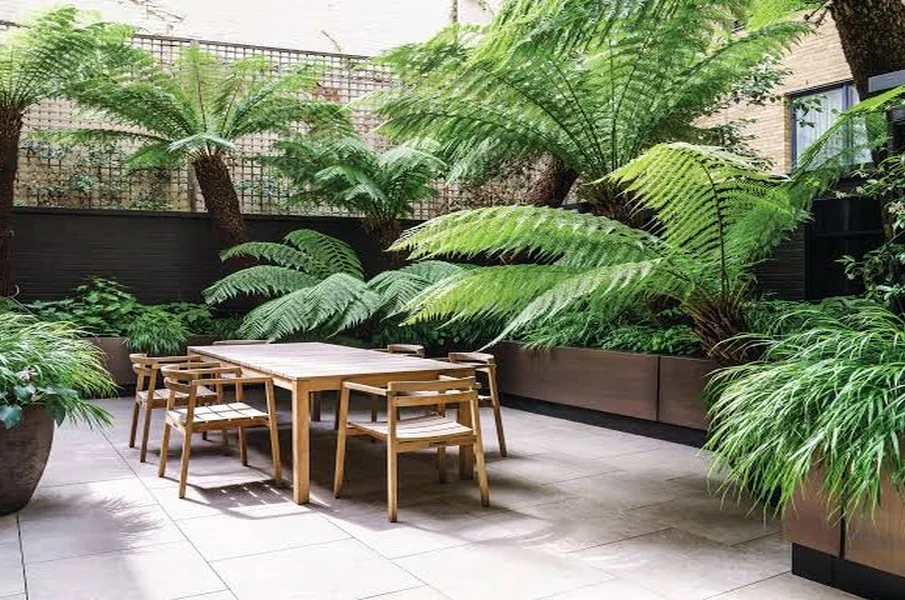
One of the biggest changes I have seen in domestic fencing has nothing to do with timber prices, composite panels or new products. It is privacy. People want more of it, yet many newer homes seem to have less of it. Smaller plots, upstairs windows looking directly into neighbouring gardens and houses packed closer together have changed what people expect from their boundaries. Good garden fencing in York can certainly help, but simply putting up the tallest solid fence you can find is not always the best answer.
I have worked on enough gardens over the years to know that privacy is rarely as simple as height.
Sometimes another 300mm of fencing fixes the problem. Sometimes it does nothing at all because the overlooking window is upstairs. In other gardens, adding a huge solid boundary makes a small plot feel like a prison yard.
The trick is working out where the loss of privacy actually comes from.
New homes have changed the privacy problem
Older housing estates often have larger gardens, mature hedges and established trees. Even where the original fencing is fairly low, years of planting create natural screening.
New developments are different.
Gardens can be compact. Trees are young. Shrubs have barely started growing. Houses may sit close together, with bedrooms and bathrooms overlooking several neighbouring plots.
You can stand in some new-build gardens and see straight into four or five upstairs windows.
That is not necessarily poor planning. Building density has changed, land is expensive and developments need to use available space efficiently.
But it creates a practical problem for the people living there.
A garden might technically have a six-foot fence and still feel completely exposed.
That is why I am seeing more customers ask about privacy before they ask about appearance.
First, work out who can actually see you
This sounds obvious, but it is something people regularly get wrong.
Before changing a fence, stand in the parts of the garden you actually use.
Sit where the patio furniture goes.
Stand near the barbecue.
Look from the back door.
Walk towards the shed.
Then look upwards.
Where are the overlooking windows?
You may find that only one small part of the garden has a genuine privacy problem.
If that is the case, screening the entire boundary could be unnecessary.
I have been to jobs where homeowners initially wanted 20 metres of fencing changed. After looking at the sight lines properly, the actual issue came from one neighbouring bedroom window.
A carefully positioned screen or section of planting solved most of it.
That saved money and kept the garden feeling open.
Six-foot fencing is not automatically private
There is a common assumption that a 1.8 metre fence gives privacy.
At ground level, it usually does a reasonable job.
Against upstairs windows, it often does very little.
Imagine somebody standing at a first-floor bedroom window. Their eye level might be four or five metres above the garden. A standard boundary fence simply cannot block that angle unless they are very close to it.
Making the fence slightly taller may still achieve nothing.
This is where experienced fencing contractors should be willing to say, “That won’t solve your problem.”
It is tempting to sell more fencing. But if another foot of timber will not block the view, there is little point installing it.
You need to deal with the sight line instead.
Taller is not always better
There are practical limits to fence height, and planning rules also need to be considered before increasing a boundary.
But even leaving planning aside, very tall solid fencing has drawbacks.
It blocks light.
It creates more wind resistance.
It can make narrow gardens feel smaller.
It casts bigger shadows.
It places greater loads on posts.
It can affect neighbouring plants.
And if the garden is already enclosed by houses, adding taller solid boundaries can make the whole space feel boxed in.
I have stood in small gardens where the owner has gained privacy but lost almost everything they liked about being outside.
That is a poor trade.
Good fencing should work with the garden rather than dominate it.
Screening the right place can work better
One technique I increasingly favour is targeted screening.
Instead of raising an entire boundary, you identify the main overlooking point and deal with that area.
This might involve a screen near a patio, pergola, slatted section or planting behind the existing fence.
The closer a screen is to where you sit, the more effective it can be.
It is basic geometry.
A two-metre screen positioned close to a seating area can block a high viewing angle that the same screen placed 15 metres away would not touch.
This can be particularly useful in compact York gardens where neighbouring homes are close together.
It also means you do not necessarily need to alter every boundary.
Slatted fencing has become popular for a reason
Modern slatted fencing has become much more common.
Some of that is fashion. There is no getting away from it. Horizontal battens suit contemporary extensions, rendered walls and modern garden designs.
But slatted fencing can also solve practical problems.
It allows more light through than a completely solid panel. Depending on the spacing and orientation, it can provide good screening without creating such a heavy visual barrier.
It also handles wind differently.
Solid fencing catches a huge amount of pressure during storms. A design that allows some airflow can reduce that load.
That matters in exposed gardens.
There is a balance, though. Gaps that look tiny when you are standing directly in front of a fence may provide surprisingly clear views from an angle.
If privacy is the main goal, check the sight line before choosing the spacing.
Hit and miss fencing deserves more attention
I have always thought hit and miss fencing is underrated.
Boards alternate between either side of the rails, allowing some airflow while still providing substantial screening.
It works particularly well in windy locations.
The drawback is that it is not completely private from every angle. Stand in the right position and you can see through the gaps.
Again, that might not matter.
If the main concern is an upstairs window directly behind the fence, it could still provide enough screening while reducing wind pressure.
Every garden has a different problem.
That is why choosing between fencing companies near me based purely on who quotes the cheapest price per panel misses the point. A contractor should look at what the fence needs to do.
Do not forget what winter wind does to privacy fencing
This becomes particularly relevant as we move into autumn.
Homeowners often add screening during spring and summer because that is when they use the garden most. Then October, November and December arrive.
A solid six-foot fence carries a lot of wind load.
Add trellis, screening material or poorly attached extensions and that load increases.
One thing I see often on local jobs is privacy screening fixed onto fencing that was already weak.
The homeowner has solved one problem and accidentally accelerated another.
Before adding anything to an existing fence, check the posts.
Push them gently.
Look along the fence line.
Check for movement at ground level.
Look for cracks around concrete footings.
If the posts already move, adding more surface area is rarely sensible.
Plants are brilliant privacy screens – eventually
Natural screening is often the nicest solution.
Trees, hedges and climbing plants soften boundaries and make gardens feel less enclosed.
The problem is the word “eventually”.
People move into a new home, plant a row of small shrubs and realise they may be waiting several years before anyone can sit outside without feeling overlooked.
This is where fencing and planting can work together.
Use fencing for immediate screening, then allow planting to mature around it.
Over time, the plants become the dominant feature and the fence fades into the background.
I have always preferred this approach to simply building higher and higher timber walls around gardens.
There is another practical point.
Do not let heavy planting destroy the fence underneath.
Ivy is the classic example. It looks good until years of wet growth become extremely heavy and start pulling panels and rails apart.
Climbing plants need management.
Garden rooms have created another privacy issue
Garden offices and garden rooms have changed how people use their outdoor space.
Ten years ago, the back corner of a garden might contain a shed and a compost bin.
Now it might contain somebody’s office.
That means people spend eight hours a day in areas of the garden they previously visited once a week.
Suddenly the neighbour’s kitchen window matters.
So does security.
Expensive computers, televisions and equipment may be sitting inside an outbuilding close to the rear boundary.
This is where privacy and security fencing start overlapping.
You want screening, but you also need to think about access points, gates and visibility from outside the property.
A completely hidden garden building can sometimes create its own security issues because nobody can see somebody tampering with it.
There is rarely one perfect answer.
Privacy around patios needs different thinking
If you spend most summer evenings on the patio immediately behind the house, that is the area worth prioritising.
Do not automatically spend thousands replacing a rear boundary 20 metres away.
A screen closer to the patio may work far better.
Pergolas are useful here because screening can happen vertically and overhead.
A well-positioned structure can interrupt views from upper windows without requiring unusually high boundary fencing.
It can also create shade, support plants and define the seating area.
This is where fencing contractor experience overlaps with basic garden design.
The question is not just “How high can we build?”
It is “Where does the screen need to be?”
Repair the existing boundary before adding to it
Autumn is a good time to assess this.
Before spending money on privacy improvements, inspect the existing fence.
Look especially at posts near gates and corners. These often take greater loads.
Check timber at soil level.
Look behind plants.
Push panels gently.
If several posts move together, investigate before adding anything.
A local fence repair service may be able to stabilise an otherwise sound boundary without replacing the whole run.
This matters because privacy additions can be surprisingly heavy.
Even lightweight timber battens create wind resistance. Trellis covered in mature plants becomes heavier every year. Artificial screening materials can behave like sails.
Fixing any of that to rotten posts is asking for trouble.
New-build ground can create its own problems
There is another issue I regularly encounter around newer developments.
The ground can be awful.
A neat layer of topsoil may hide compacted subsoil, rubble, broken bricks and leftover building material. Drainage can vary dramatically across the same garden.
You start digging a post hole and find everything except soil.
This affects both fence installation and long-term stability.
A post should not simply be pushed into whatever hole can be created most easily.
For standard domestic fencing, around 600mm is a common starting depth for posts, but ground conditions, fence height and exposure may mean going deeper.
Privacy fencing deserves particular attention because taller solid sections catch more wind.
If someone carrying out fence installation near me does not account for that, the fence may look perfect through summer and begin moving after its first wet winter.
Composite fencing is becoming part of the privacy conversation
Composite systems are increasingly popular with people who want a cleaner appearance and less maintenance.
They can work particularly well in modern gardens.
The panels do not need the same staining routine as timber and there are plenty of contemporary designs.
But fencing composite fencing cost is higher than many traditional timber options, especially once posts, rails, groundwork and labour are included.
It is worth thinking about how long you intend to stay in the property.
If you want low maintenance for many years, composite may make sense.
If budget matters more and you are happy treating timber periodically, traditional fencing remains difficult to beat.
Do not assume composite solves wind problems either.
The posts still need proper foundations.
A badly installed composite fence is still a badly installed fence.
Neighbours need to be part of the conversation
Privacy projects can become neighbour disputes surprisingly quickly.
One person wants more screening. The person next door thinks they are losing light.
Someone thinks the existing fence belongs to them.
Another person assumes the boundary runs somewhere it does not.
This is why I always advise sorting out boundary questions before work begins.
Do not wait until somebody is standing in the garden arguing with the installers.
Talk first.
Check property documents if ownership is unclear.
Explain what you intend to do.
You may even find the neighbour has exactly the same privacy problem and is happy with the proposed change.
Good communication is much cheaper than a boundary dispute.
Think about privacy from inside the house too
This gets missed surprisingly often.
People stand in the garden and decide where screening should go.
Then they walk back indoors and realise they can still see straight into the neighbouring house from the kitchen.
Or the neighbour can see into theirs.
Look through your own windows before planning fencing.
The ideal screen position may change completely.
You may discover the real problem is not garden privacy at all. It is a direct window-to-window sight line.
In those cases, planting or a carefully positioned tree can sometimes work better than fencing.
Small gardens need restraint
I am increasingly cautious about recommending huge solid boundaries in tiny gardens.
Yes, privacy matters.
But so does daylight.
A small garden surrounded by six or seven feet of solid timber can feel oppressive.
Lighter fencing styles, planting, screens and different heights can create privacy without turning the space into a wooden box.
Many homeowners searching for fencers near me already have a picture in their head of what they want.
A good fencing contractor should sometimes challenge that.
Not for the sake of it. Because we have seen what these ideas look like once they are built.
I have talked customers out of spending more money because their original plan would have made the garden worse.
That is part of the job too.
Maintenance matters with privacy screens
Anything added to a boundary needs checking.
Autumn is ideal.
Cut back heavy growth.
Check fixings.
Look for rotten battens.
Make sure trellis has not pulled away.
Check that posts remain vertical.
Clear leaves and soil from timber bases.
Watch for water collecting around posts.
A ten-minute inspection can spot a problem before winter wind finds it for you.
If something moves now, it will probably move more in January.
What I would do in an overlooked York garden
I would not begin with a catalogue.
I would stand in the garden.
I would look at where people sit, where children play and which windows create the problem.
Then I would look at light, wind direction and the existing boundary.
Only after that would I choose materials.
The answer might be closeboard fencing.
It might be slatted timber.
It might be composite.
It could be a small privacy screen beside the patio.
It might be fencing combined with planting.
Sometimes the existing fence is perfectly adequate and does not need touching.
That is the part people often miss.
Privacy is not really a fencing problem. It is a sight-line problem.
Once you treat it that way, the solution usually becomes much clearer.
The best privacy work I have seen over the years rarely involves simply building the biggest possible barrier. It comes from putting the right amount of screening in the right place, making sure the structure underneath is sound and leaving enough light and space for the garden still to feel like somewhere you actually want to spend time.